Justice is at the core of our faith. Indeed, it is embedded in our Principles, particularly the Second, and Sixth. The Second Principle reads that we affirm and promote justice, equity, and compassion in human relations, while in the Sixth Principle , we affirm and promote the goal of world community with peace, liberty, and justice for all.

As a minister, I understand that our congregations are called to make a positive difference in the wider community. Social justice work extends the ministry and vision of the congregation beyond the four walls of the building. Social justice work puts our UU values collectively into practice and guides us to be in deep and direct relationships with others.
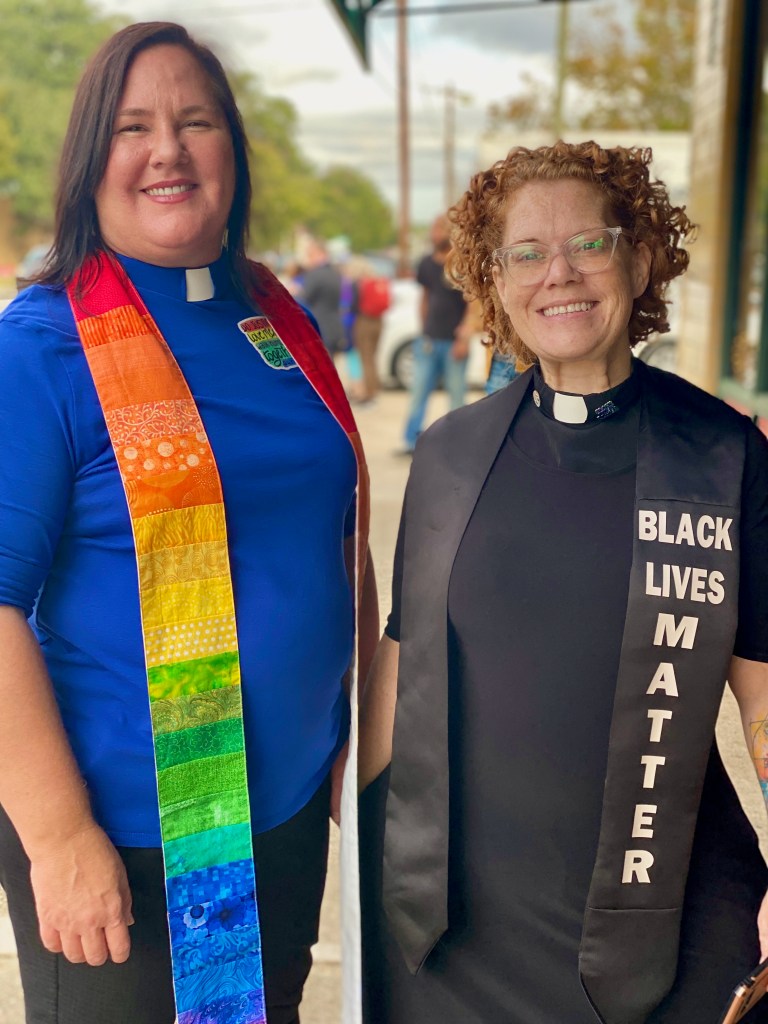
I believe that UU congregations function in their larger communities when they know their neighbors and seek to support and partner with people who face injustice. Thus, the work as a religious community is first to learn, and then to advocate and act for justice. This process is one way we live out the values of our faith.
I am committed to working as a partner for interfaith work in my ministry. In my years of training as a UU chaplain in urban ministry and at a pediatric hospital, I provided care to families of all faiths. I became adept at providing care for many spiritual traditions.
I was able to reach across the usual divides of religious difference and be present for families of other faiths in their grief in the unique way that our faith can offer. Unitarian Universalism, more than almost any other faith, teaches us to honor and appreciate religious differences. While we need to be wary of appropriation, we are nonetheless often among the most gifted in honoring and appreciating the practices and beliefs of others.
It will be important as a congregational minister to reach out to our religious and community neighbors in order to stretch across differences and build coalitions. Our world sorely needs true examples of being good neighbors at this time. Anti-oppression work and social justice work are done with our neighbors, who are of other faiths in our community. We need not always lead to contribute; often, learning from our neighbors is at least as important.
 Rev. Christina Branum-Martin